
The Internet Has a Context Problem
Dead Internet Theory used to sound fringe. Now it feels like the feed.

This issue of Social Signals was written to The New Year’s The End is Near from 2004.
When was the last time you saw something get popular and actually believed the crowd around it was real? I don't mean the content itself, I mean the social accounts supposedly loving it, hating it, clipping it, and screaming about it in the quotes.
Because I'm starting to think we've crossed some kind of line on that, and most of us are quietly adjusting to it without saying much. That’s the subject of our latest podcast on The Cave Project linked below.
Also, I wrote a TL;DR of Google’s big launches this week because Google really changed how Google Search and YouTube work. Plus, I vibe-coded an app where you can send my dog to the moon (finally). And I’m wondering if we need to start posting as brands on Instagram Instants. Lots of things this week. Hooray. -Greg
Dead Internet Theory Meets the FYP
I shared this back in March from the head of product at X/Twitter and have referenced it a couple times since. We’re officially past the 90-day mark now:
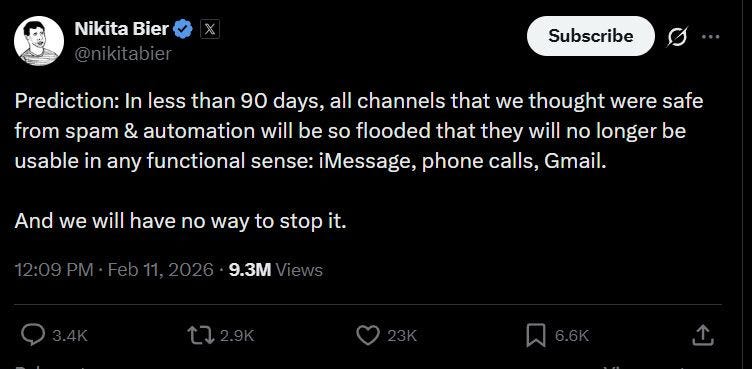
“Prediction: in less than 90 days, all channels we thought were safe from spam & automation will be so flooded they will no longer be usable in any functional sense: iMessage, phone calls, Gmail. And we will have no way to stop it.”
That may still be coming thanks to Openclaw-style automations that I and others are experimenting with right now. But what I’m noticing is that this already feels true about content. Social media content especially.
The flashing signals are everywhere. We’re living inside a fake feed environment where it’s getting harder to tell the difference between what’s genuinely popular and what’s been manufactured to feel popular.
Some mandatory reading:
The Atlantic: How Short-Form Clips Took Over the Internet
Forbes: The ‘Creator Of Clipping’ Who Powers Crypto Gambling’s Viral Machine
Marketing Brew: Clip it good: How marketers are making experiences worth clipping
Garbage Day: Everything’s probably fake now
Is Dead Internet Theory a conspiracy theory or just the user experience of being online in 2026?
Starting around 2016, Dead Internet Theory emerged as an online conspiracy theory suggesting that the internet had ceased to be human-dominated. The claim was that the web had become predominantly populated by bots, AI, and algorithmically manipulated content designed to control populations and farm engagement.
For years, that sounded a little fringe. But now I feel like we’re sitting at the fulcrum of dead internet engagement. We’re in that moment where you can look backward and look forward and see the change happening.
We can still see the content. We can still recognize the formats. We still know what a viral song, a celebrity clip, a podcast moment, a political outrage cycle, or a comment section is supposed to feel like. But the context is eroding.
The problem isn’t condensed content, it’s faked context.
Is the popularity of the band Geese or Noah Kahan actually a psy-op? Was that SNL performance actually as awesome as my feeds say? Was Justin Bieber’s Coachella set truly controversial? Were people actually mad about Cracker Barrel’s logo?
This week on The Cave Project, Jenny and I talked about clipping, “trending simulation” as the new stealth marketing, and the strange new gray zone where short-form content has become the culture itself.
Earlier this month I wrote: the internet has discovered clipping (!!!), which podcasters have been doing for years. Marketers are now designing experiences specifically to be clipped and shared as short-form moments, which means the clip is no longer a byproduct of the content. It IS the content.
But clipping itself isn’t the problem. Jenny and I clip our podcast. We post shorts. We want people to find us in the feed. We know most of them will never listen to the long form or watch the video on YouTube. That’s how culture works right now.
Let’s watch a clip about clipping, shall we?
If the crowd is fake, what happens to culture?
When companies go to SXSW and do interviews with New York Mag bragging about opertating tens of thousands of dummy accounts, incentivizing people to post without disclosure, and are bragging about simulating a trend so people feel like they’re joining something already in motion, that’s not culture moving naturally. That’s astroturfing. It’s been happening a long time (hello payola), but never so much in the wide open, in interviews, and on-stage.
And maybe the weirdest part is that many people already assume the worst. Jenny made a point in the episode I’m struggling with: maybe normal people are already walking into all aspects of social media assuming it’s manipulated…
And if the crowd is fake, then what happens to culture? What happens to taste? What happens to discovery? What happens to the feeling of finding something before everyone else does? I
I don’t think the internet is dead. There are still plenty of humans on it. And culture has always been affected and persuaded by outside forces.
But this moment where you can see the discussion about good bots versus bad bots is a concerning signal. And an opportunity for more human-focused social. Again. -Greg
🎙️ The Latest Episode of The Cave Project™️: The Feed is Fake, But We’re Still Watching the Clips

🎧 Listen on Apple Podcasts or Spotify, watch on YouTube, subscribe on Substack to be notified of future episodes, and follow The Cave Project on Instagram, TikTok and Facebook. Learn more at caveproject.co

🎤 See Greg Live in 2026
Axios Communicators/Mixing Board - July 8
Digital Summit Minneapolis - August 12-13
Digital Summit Atlanta - October 6-7
To inquire about Greg speaking at your event or with your team, email greg (at) gregswan (dot) net
Should Your Brand Be Posting Instagram Instants? Probably
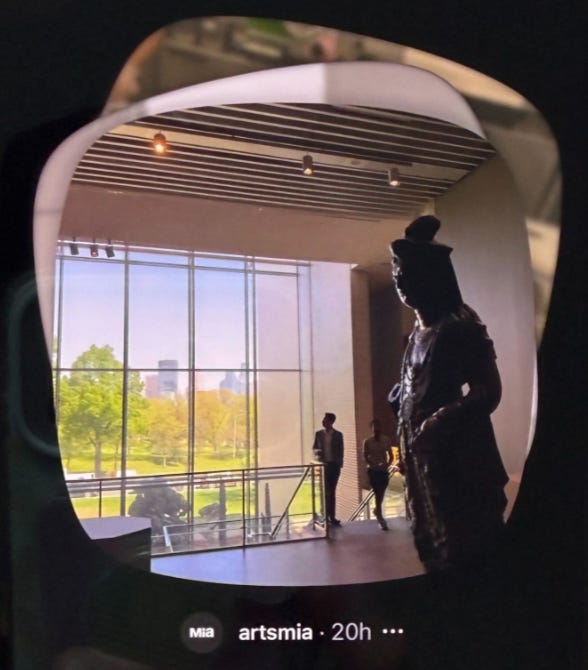
Are you guys seeing brands doing Instagram Instants?
Instants is an Instagram feature that allows you to capture unedited, real-time photos and share them instantly with your Close Friends or mutual followers. Similar to Snapchat and BeReal, the images cannot be uploaded from your camera roll and disappear entirely after being viewed once.
So far I've just seen Minneapolis Institute of Art (no screenshots allowed so had to borrow Jenny’s phone) for the above.
I could see entertainment and travel brands doing some fun real-time destination content, but it would require someone signed into the account to be somewhere cool. MIA is a great example of this.
I could also see this working well with any modern social brand who has an in-house social team who can be hands on with product, services, or office-related brand culture.
But… the ROI would be hard to justify and reminds me of the first days of getting brand’s posting organically on Snapchat… and then BeReal. It’s not a function built for brands, but I’m sure some creative brands will do some fun things with this — at least for this initial window where folks are getting notifications and paying attention. That’s a free idea for you. You’re welcome. -Greg
🚀✨🌗 Help Berdie Go to the Moon
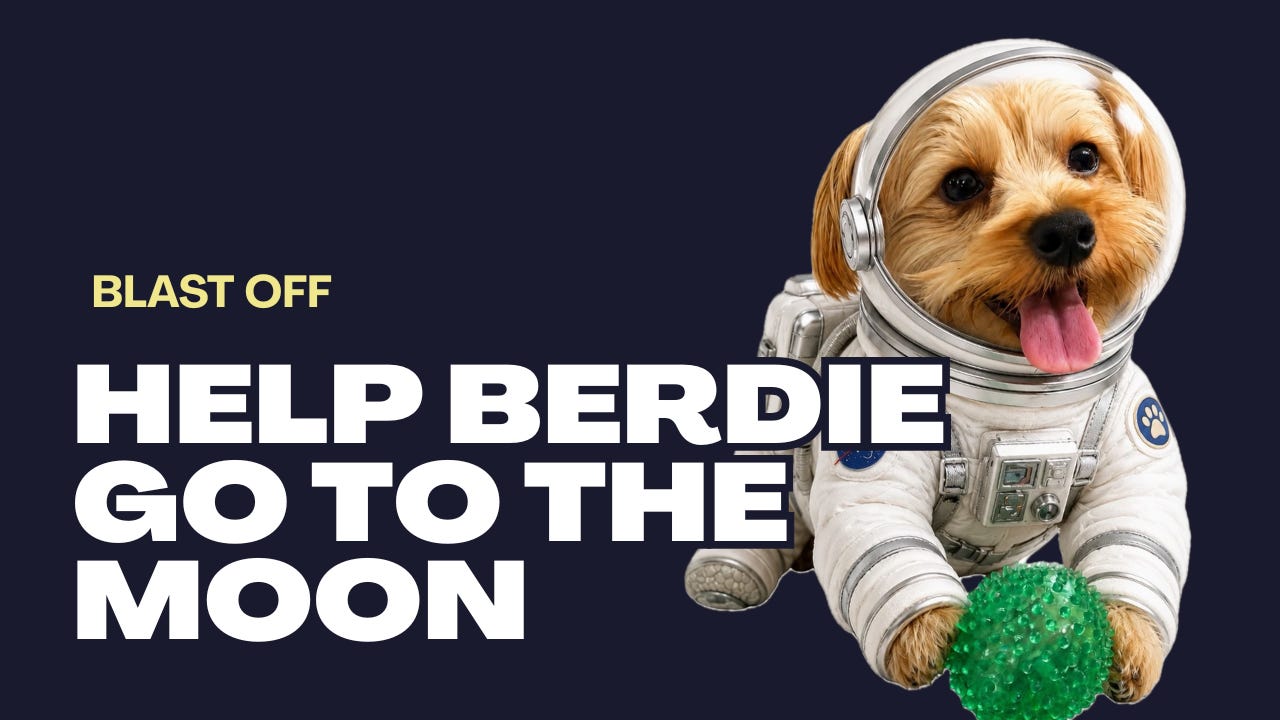
My dog was sad she couldn’t go to the moon with the Artemis mission, so one night this week I sat on my couch and vibe coded this mobile game experience where YOU can help her go to the moon (finally). TRY IT HERE.
😎 Greg’s Top 10 Things That Actually Matter From Google I/O 2026:
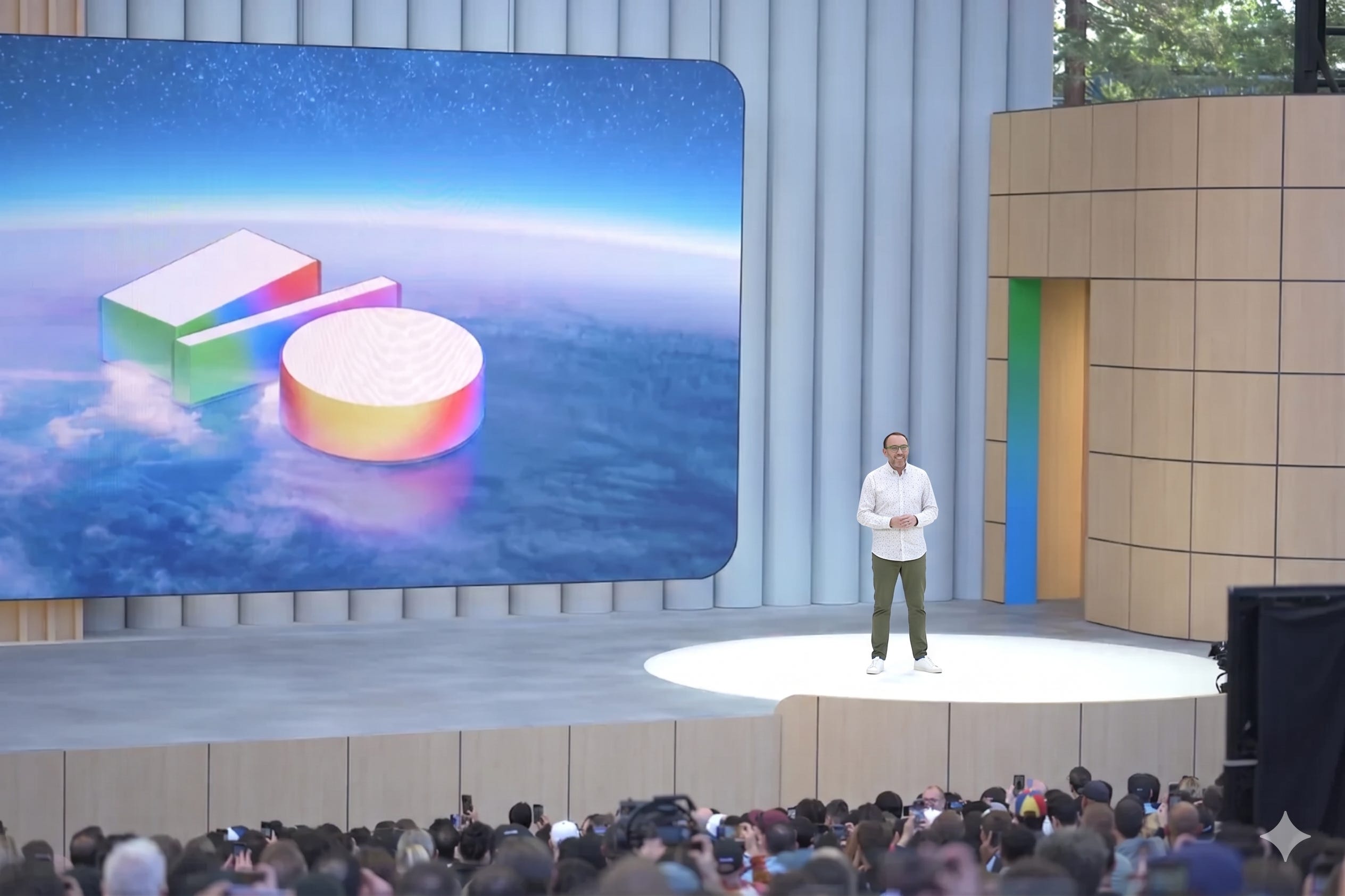
First of all, Google finally redesigned the search bar after 25 years, betting Gemini 3.5 Flash can handle longer questions, image and video uploads, and follow-up chats right on the results page. Sundar called AI Mode "a revelation." One analyst said "the open web is on its way out" as Google reduces sites to raw data providers. The signal: SEO and GEO strategy from 2025 won't carry you.
Here are my other TL;DR’s:
Gemini Omni — A new model series that can accept any input and create any output, starting with conversational video editing that lets you modify characters, backgrounds, and elements with your voice. The “any input, any output” framing is the biggest model ambition Google has ever stated. Above is a photo I inserted myself in using Omni and below is a test I did changing a video I took at a Vikings football game and asking it to change it into a Minnesota Twins baseball game. (The Twins have never played in US Bank Stadium).
Gemini Spark — Google’s new personal agent takes actions on your behalf inside Gmail, Docs, and Workspace, with third-party tool support via MCP coming this summer. This is the shift from AI that answers to AI that acts. Available next week for Ultra subscribers. I’ve been using a bootleg tool similar to this. I think it’s going to be pretty powerful.
Gemini 3.5 Flash — The new model surpasses 3.1 Pro across coding, agentic, and multimodal benchmarks at 4x the output speed of other models. It’s live now across Search and the Gemini app.
AI Mode in Search gets background agents — New information agents work 24/7 monitoring the web, blogs, news, and real-time data for changes related to your specific questions in Google itself, turning Search from a query tool into a surveillance layer. Coming this summer for Pro/Ultra. This means normal people doing normal searches will encounter agents!!
Universal Cart + Agentic Shopping — So this is big and crazy. Google’s new Universal Cart works across merchants and lets AI agents make purchases on your behalf using price and brand parameters you set. The death of the product detail page isn’t coming from social, it’s coming from here.
Intelligent Eyewear (Audio Smart Glasses) — You all know how bullish I am on smart glasses. Google’s first audio glasses, made with Samsung and Qualcomm hardware and designed by Gentle Monster and Warby Parker, are coming this fall and will work on both Android and iOS. Meta’s Ray-Bans just got their biggest competitor. And more mainstream access of glasses that actually look good in the smart glasses adoption cycle.
Google Pics — A new image generation and design tool inside Google Workspace that creates posters, flyers, and infographics similar to Canva, with all content watermarked via SynthID. Canva should be paying attention. Rolling out this summer.
Daily Brief — Oh yes. A personalized digest that pulls from Gmail, Calendar, and Tasks to prioritize your day and suggest next steps, rolling out today for AI Plus, Pro, and Ultra subscribers in the US. This is the morning briefing product every AI company has been racing to own. Try it here! Mine was VERY good.
Ask YouTube — YouTube is completely changing its utility with this launch. This is a conversational search feature for YouTube that handles complex queries and follow-ups, surfacing the most relevant videos that are timestamped for what you’re asking for. It reframes YouTube less as a feed and more as a knowledge base. It’s available now to premium members and will hit all YouTube users soon.
SynthID + C2PA Content Credentials expanding — Google’s AI detection tools are expanding from the Gemini app into Search and Chrome, letting users verify whether content is an unaltered original or has been AI-modified. The provenance layer for content has been too slow to become infrastructure. This is both needed and not enough. See that image of me on stage at Google? I don’t think Substack is flagging to you that was generated in Gemini, and it should. Otherwise you wouldn’t know the video below is AI unless I clearly labeled it and chose to use the YouTube AI disclosure (both of which I did)…
Whew - that’s enough for the week. And thanks for all the feedback on my mid-week post, I Gave a Commencement Speech in 2020. Nobody Booed. The kids are going to be all right.
See you on the internet! 🚀✨
Greg